Engram
The memory layer for AI agents. Self-hosted and tool-agnostic: one brain that outlives whichever CLI is hot this quarter. Open-source core, with an enterprise edition for organisations.
01 / The build
One memory that every agent shares.
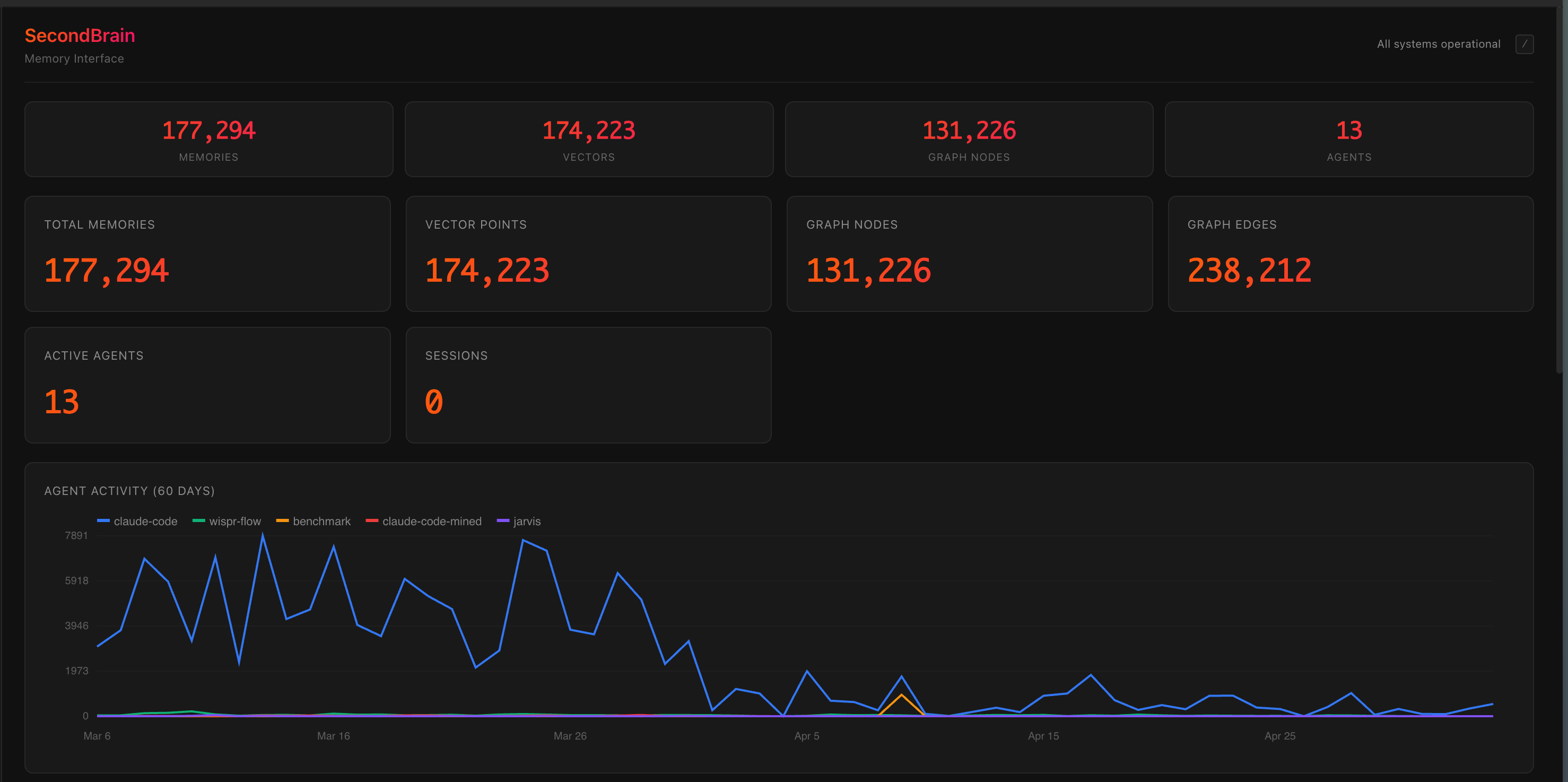
Engram captures what your agents do — sessions, edits, voice notes, documents, ideas — and indexes it across vector, graph and full-text search. Any agent can read from it and write to it: Claude Code, Codex, Cursor, or your own.
It ships in two editions from one core. The open-source edition is single-user and self-hosted, meant to sit on your own machine. The enterprise edition takes the same idea to an organisation: every employee querying what the company collectively knows, running in Trusted Execution Environments in Swiss data centres.
Why I built it
Every AI coding agent re-discovers the same bug. Today's Claude re-debugs what yesterday's Claude already fixed, the voice note never reaches the editor, and the idea from three weeks ago is gone. Tools change every quarter — the memory should not have to change with them.
02 / Design decisions
The trade-offs are part of the story.
01Tool-agnostic, not tool-aligned
Every agent reads and writes the same store, so switching CLIs costs you nothing. Betting on one vendor's memory format is how you lose the corpus when you switch.
02Anti-patterns as first-class facts
Storing what failed matters more than storing what worked. The goal is not recall, it is agents that stop repeating mistakes they already made.
03Lean by default
pgvector inside Postgres, so there is no separate vector database to run. Qdrant is available when scale genuinely needs it, not before it does.
04Knowledge graph first, LLM second
In the enterprise edition every query hits the graph before it reaches a model, and only escalates when confidence is low. Cheaper and faster, and most answers never leave the building.